
How Data Centers, Electricity and Technology Spending Affect Small Businesses
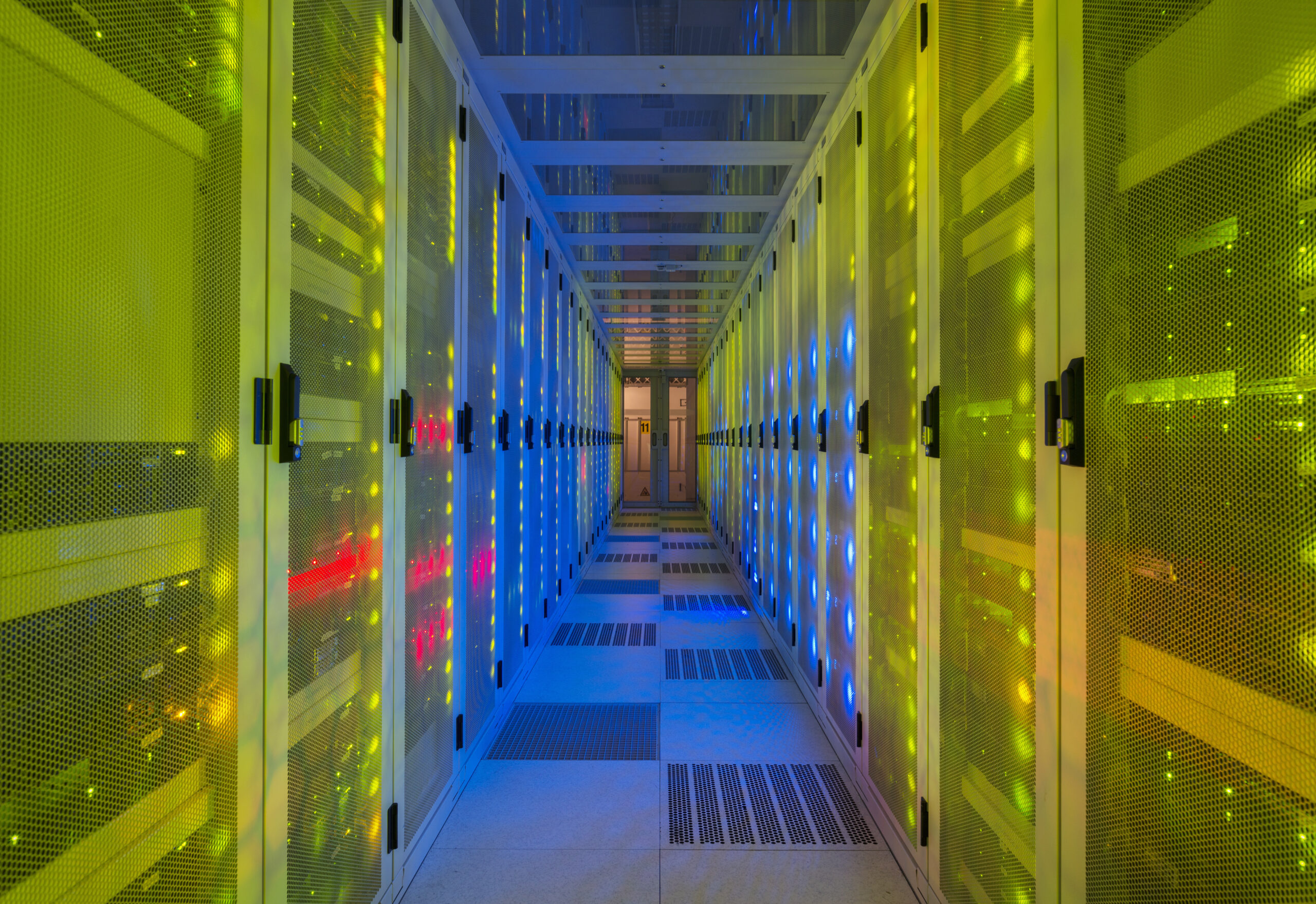
The Hidden Cost of AI in 2026: How Data Centers, Electricity and Technology Spending Affect Small Businesses
Artificial intelligence is being promoted as one of the greatest productivity tools in modern business.
It can write marketing content, analyze customer behavior, automate administrative work, respond to inquiries, assist sales teams, detect fraud, generate reports and help business owners make faster decisions.
For small businesses operating with limited staff and tight margins, those benefits are difficult to ignore.
But there is another side to the AI revolution that receives far less attention.
Artificial intelligence is not powered by software alone. It depends on enormous investments in data centers, semiconductors, cloud infrastructure, electricity generation, cooling systems, cybersecurity, specialized employees and high-capacity transmission networks.
Those investments are creating a new category of economic pressure that can be described as AI-driven cost inflation.
This does not mean artificial intelligence is responsible for all inflation or that every business will experience the same effect. Energy prices still depend on fuel costs, weather, generation capacity, regulation, transmission investments and local market conditions.
However, the rapid expansion of AI is becoming an important additional source of demand for electricity, advanced chips, construction capacity, technical talent and digital services. In areas where data centers are heavily concentrated, that demand can influence utility infrastructure, commercial power costs and competition for resources.
For small business owners, the challenge is no longer simply deciding whether to use AI.
The more important question is:
Will the productivity generated by artificial intelligence exceed its full financial cost?
AI Is Creating an Infrastructure Boom, Not Just a Software Trend
Most people experience artificial intelligence through a website, application or chatbot. Because the interface appears simple, it is easy to underestimate the physical infrastructure operating behind it.
AI systems require specialized processors, high-speed networks, storage, cooling equipment, backup power and facilities capable of operating continuously.
The International Energy Agency projects that electricity consumption from accelerated servers, primarily driven by artificial intelligence, will grow approximately 30% annually through 2030. Data center electricity consumption in the United States could increase by around 240 terawatt-hours from its 2024 level, representing growth of approximately 130%.
The United States Department of Energy previously estimated that data centers consumed approximately 4.4% of total U.S. electricity in 2023. Depending on the pace of expansion, their share could reach between 6.7% and 12% by 2028. An updated Lawrence Berkeley National Laboratory analysis estimates that data centers could represent approximately 11.8% of U.S. electricity consumption by 2030, with a possible range between 9.5% and 15.3%.
The U.S. Energy Information Administration also reports that servers accounted for an estimated 7% of electricity consumed by the commercial building sector in 2025. Server electricity use could eventually represent between 22% and 33% of commercial building electricity consumption by 2050, depending on future demand.
This represents a major change for the American power system.
For decades, electricity demand grew relatively slowly. Utilities, regulators, and grid operators now face large facilities requesting enormous amounts of continuous power, sometimes equivalent to the electricity consumption of a small city.
The effect will not be uniform across the country. Data centers tend to be concentrated in specific regions, making their impact much more significant for particular utility systems and communities than national averages might suggest.
Why Should a Small Business Care About Data Centers?
A restaurant, warehouse, medical office, or construction company may never own an AI server. Nevertheless, it can still be affected by the infrastructure required to operate artificial intelligence.
The connection occurs through several channels:
- Electricity rates.
- Utility infrastructure expenses.
- Higher demand for electrical equipment.
- Construction labor and materials.
- Semiconductor and technology prices.
- Cloud computing charges.
- Software subscription costs.
- Cybersecurity requirements.
- Competition for technical employees.
- New regulatory and compliance expenses.
The debate has become serious enough that the Federal Energy Regulatory Commission directed the six regional grid operators under its jurisdiction to justify or reform rules governing how data centers and other large electricity users connect to the grid.
The objective is to accelerate necessary connections while preventing existing customers from unfairly absorbing the cost of serving major new users.
In Florida, concerns over electricity, water use and possible rate increases have contributed to opposition or delays involving data center projects in more than 20 counties and municipalities. State legislation signed in 2026 requires large-scale data centers to cover their own energy and water costs.
This does not prove that every utility bill increase is caused by artificial intelligence. It does demonstrate that regulators and communities now consider cost allocation a significant economic issue.
The First Hidden Cost: Commercial Electricity
Electricity prices were already increasing before the latest wave of AI investment.
According to the U.S. Energy Information Administration, average U.S. commercial electricity prices increased 4.8% year over year in April 2026. The agency has also noted that retail electricity prices have increased faster than general inflation since 2022.
Artificial intelligence is only one part of that story. Fuel prices, grid modernization, storm recovery, renewable integration, transmission expansion and local regulation also affect rates.
Nevertheless, large data center demand may intensify the need for:
- New transmission lines.
- Additional generating capacity.
- Substations.
- Transformers.
- Storage systems.
- Backup generation.
- Grid reliability improvements.
The critical question is who ultimately pays for those investments.
If large users cover the full cost of connecting and serving their facilities, the effect on existing businesses may be limited. If some costs are spread across the utility customer base, local small businesses could experience higher electricity rates even though they receive no direct benefit from the data center itself.

Example: A Refrigerated Food Distributor
Consider a regional food distributor operating a refrigerated warehouse.
The company uses approximately 100,000 kilowatt-hours of electricity per month to power refrigeration, lighting, offices and material-handling equipment.
At an electricity rate of 13 cents per kilowatt-hour, its monthly electricity expense is approximately:
100,000 kWh × $0.13 = $13,000
If its commercial rate increases by 5%, the new monthly cost becomes approximately:
$13,000 × 1.05 = $13,650
The difference is $650 per month, or $7,800 annually.
A 5% increase may appear manageable, but the company could simultaneously face higher insurance, labor, transportation, and refrigeration maintenance costs.
If the distributor operates on a 5% net profit margin, it must generate approximately $156,000 in additional annual sales to replace the $7,800 lost to the electricity increase.
That is why seemingly modest operating cost changes can have a disproportionate effect on small-business profitability.
The Second Hidden Cost: The AI Software Stack
Artificial intelligence initially appears inexpensive.
A business owner may subscribe to one writing assistant, one design platform, one customer service system, and one automation tool. Each subscription may cost only a small amount.
The problem emerges when different departments begin purchasing overlapping services.
A company may gradually accumulate:
- An AI writing platform.
- A graphic design subscription.
- A meeting transcription service.
- A customer relationship management add-on.
- An email automation system.
- A chatbot.
- A lead-scoring tool.
- A proposal generator.
- An accounting assistant.
- A scheduling platform.
- A cybersecurity monitoring service.
- Additional cloud storage.
The Small Business & Entrepreneurship Council reported in 2026 that surveyed small employers were using a median of five AI tools. The most common use cases included research, marketing, content creation, customer communication, lead generation and administrative automation.
A five-tool stack may be useful. It can also become five separate subscriptions, five contracts, five security risks, five training requirements and five systems that may not communicate properly.
Example: A Professional Services Firm
A 15-employee consulting firm purchases the following systems:
- AI writing platform: $300 per month.
- Customer service chatbot: $450 per month.
- CRM automation: $600 per month.
- Meeting and transcription software: $225 per month.
- Proposal-generation platform: $350 per month.
- Integration and workflow service: $400 per month.
The direct subscription cost is:
$2,325 per month
Annual subscription expense:
$27,900
The company also spends:
- $8,000 on implementation.
- $6,000 on outside consulting.
- $4,500 on employee training.
- $3,500 on security improvements.
Its first-year cost is not $27,900. It is approximately:
$49,900
To justify the investment, the firm must generate at least $49,900 in new gross profit or measurable cost savings—not merely $49,900 in additional revenue.
If the company earns a 25% gross margin on new business, it may need nearly $200,000 in additional revenue to recover the investment.
The lesson is simple: never evaluate an AI tool by its monthly subscription price alone.
The Third Hidden Cost: Implementation
Purchasing artificial intelligence does not automatically produce productivity.
A company must determine:
- Which process will be improved.
- What information the system needs.
- Where that information is stored.
- Who is responsible for reviewing outputs.
- How the platform connects to existing software.
- What happens when the system makes a mistake.
- How customer data will be protected.
- How employees will be trained.
- How results will be measured.
Goldman Sachs reported in March 2026 that 76% of surveyed small businesses were using artificial intelligence and 93% of users reported a positive impact. However, only 14% had fully integrated AI into their core operations, and 73% said additional training and resources would help them implement it successfully.
This gap between adoption and integration is extremely important.
Many businesses have experimented with AI. Far fewer have redesigned their operations around it.
Testing a chatbot is easy. Creating a controlled system that can receive a customer inquiry, identify the correct account, generate an accurate response, update the CRM, protect confidential information and escalate exceptions to a human employee is considerably more difficult.
The cost is not only software. It includes process design, data preparation, testing, supervision and employee time.
The Fourth Hidden Cost: Bad Data
Artificial intelligence cannot repair every operational weakness.
If the company has:
- Duplicate customer records.
- Incorrect inventory information.
- Inconsistent product descriptions.
- Missing invoices.
- Unorganized documents.
- Unclear pricing rules.
- Outdated procedures.
- Poorly defined employee responsibilities.
An AI system may process those weaknesses faster without actually correcting them.
Automating a disorganized process can create a more expensive version of the same problem.
For example, a distributor may attempt to use AI to forecast inventory. But if its historical records do not distinguish between lost sales, stockouts, seasonal promotions and discontinued items, the forecast may recommend purchasing the wrong products.
The company then pays for the software and the excess inventory.
Before investing heavily in artificial intelligence, businesses should evaluate the quality, availability and ownership of their data.
The Fifth Hidden Cost: Human Review
AI-generated work still requires supervision.
A system can produce a professional-looking answer that contains an incorrect number, nonexistent regulation, inaccurate product specification or misleading financial conclusion.
The risk is especially significant in:
- Legal communications.
- Lending decisions.
- Medical information.
- Tax preparation.
- Financial projections.
- Insurance documents.
- Employee management.
- Advertising claims.
- Customer contracts.
- Technical specifications.
Human review reduces that risk, but it also reduces some of the promised labor savings.
Suppose an employee previously needed two hours to prepare a proposal. An AI system reduces the initial drafting time to 20 minutes, but a manager must spend 40 minutes reviewing and correcting the result.
The business still saves one hour, which may be valuable. However, it does not eliminate two hours of labor.
A realistic return-on-investment calculation must measure the entire workflow, not only the speed of the first draft.
The Sixth Hidden Cost: Cybersecurity
Artificial intelligence can improve cybersecurity, but it also gives criminals more effective tools.
AI can help attackers create highly personalized phishing emails, imitate writing styles, generate convincing fake invoices, clone voices and automate attempts to identify system vulnerabilities.
Reuters reported in July 2026 that increasingly sophisticated AI-enabled attacks are forcing companies to invest more in cybersecurity products, internal controls and cyber insurance. The publication noted that the cost of protecting against AI-enhanced threats may reduce part of the productivity benefit companies expect to receive from AI itself.
The Federal Trade Commission has also warned about AI-enabled impersonation, voice cloning, deceptive AI claims and fake reviews. Businesses remain responsible for complying with advertising, consumer protection and fraud laws when using artificial intelligence.
For a small business, implementing AI may require additional spending on:
- Multifactor authentication.
- Employee security training.
- Access controls.
- Backup systems.
- Vendor assessments.
- Cyber insurance.
- Transaction approval procedures.
- Email protection.
- Data-loss prevention.
- Legal review.
- Incident response planning.
Example: Fake Vendor Instructions
An accounts payable employee receives an email that appears to come from a long-term supplier.
The message explains that the supplier has changed banks and includes new ACH instructions. The writing style, logo, signature and attached invoice all appear legitimate.
The employee changes the payment information and transfers $42,000.
Days later, the actual supplier reports that it never received payment.
Artificial intelligence may not have caused the original vulnerability, but it can make the fraudulent communication much more convincing.
A company adopting AI should therefore strengthen payment controls at the same time.
Any change in bank instructions should require:
- Verification through a previously known telephone number.
- Approval by a second employee.
- Written documentation.
- A waiting period for significant changes.
- Notification to the vendor’s established contact.
The Seventh Hidden Cost: Technology Dependence
Artificial intelligence platforms can become deeply embedded in operations.
Employees learn the system. Customer records are stored inside it. Automations depend on it. Reports are designed around it.
Later, the provider may:
- Increase prices.
- Change usage limits.
- Eliminate features.
- Modify privacy terms.
- Restrict integrations.
- Discontinue a product.
- Charge more for data storage.
- Require an enterprise plan.
- Limit access to the most advanced models.
At that point, switching platforms may require retraining employees, migrating data, and rebuilding workflows.
This is known as vendor lock-in.
Before implementing an AI platform, business owners should ask:
- Can company data be exported?
- In what format?
- Who owns generated content?
- Is customer information used to train external models?
- What happens when the subscription ends?
- Can workflows operate without the platform?
- Are prices guaranteed for any period?
- Are there limits based on users, messages, tokens, or transactions?
- Does the contract automatically renew?
The exit cost should be evaluated before entering the relationship.
AI Inflation Is Also Affecting Hardware and Technical Talent
The physical AI build-out is one of the largest capital investment cycles in modern technology.
Goldman Sachs estimates that annual AI infrastructure capital expenditures could reach approximately $765 billion in 2026 and $1.6 trillion by 2031. Its baseline model implies cumulative investment of approximately $7.6 trillion between 2026 and 2031, including processors, data centers, cooling, power delivery, backup systems and related infrastructure.
The Semiconductor Industry Association projects that annual semiconductor revenue associated with AI data centers could reach $1.2 trillion by 2028.
This demand can influence the cost and availability of:
- Advanced processors.
- Memory.
- Networking equipment.
- Electrical components.
- Cooling systems.
- Transformers.
- Backup generators.
- Specialized construction.
- Data engineers.
- Cybersecurity professionals.
- Cloud architects.
- AI consultants.
Not every laptop or business server will experience the same price increase. However, small businesses purchasing advanced equipment or competing for specialized workers may find themselves bidding against much larger companies with significantly greater budgets.
Is Artificial Intelligence Helping or Hurting Small Businesses?
The correct answer is: both are possible.
Small businesses are reporting meaningful advantages.
The U.S. Chamber of Commerce found that 58% of surveyed small businesses identified themselves as generative AI users, up from 40% in 2024. Eighty-four percent planned to increase their use of technology platforms, and many credited technology with helping them manage inflation and supply-chain disruption.
Artificial intelligence can produce genuine value when it is applied to a well-defined problem.
Strong use cases may include:
- Reducing repetitive data entry.
- Responding faster to routine customer inquiries.
- Identifying qualified sales leads.
- Improving appointment scheduling.
- Summarizing meetings.
- Monitoring inventory.
- Detecting payment anomalies.
- Drafting standard communications.
- Comparing vendor proposals.
- Improving pricing decisions.
- Organizing documents.
- Accelerating financial reporting.
The danger appears when a business invests because competitors are discussing AI rather than because it has identified a measurable operational need.
Technology should solve a business problem. The business should not invent a problem to justify the technology.
How to Calculate the True Cost of AI
The true cost of ownership should include at least eight categories.
1. Subscription Cost
Include monthly fees, user licenses, transaction charges, storage, premium features and future price increases.
2. Implementation Cost
Include consultants, developers, integrations, workflow design, testing and project management.
3. Training Cost
Measure employee training hours and the temporary productivity reduction that occurs while workers learn a new system.
4. Data Preparation
Include cleaning, organizing, transferring and securing company information.
5. Cybersecurity and Compliance
Include access controls, monitoring, insurance, legal review, privacy requirements, and vendor assessments.
6. Human Supervision
Estimate the time required to review, correct and approve AI-generated work.
7. Error and Rework Cost
Measure the financial impact of incorrect outputs, duplicated work, customer complaints, and operational mistakes.
8. Exit Cost
Estimate data migration, contract termination, retraining, and workflow reconstruction if the platform fails or becomes too expensive.
The complete calculation can be expressed as:
Total AI Cost = Software + Implementation + Training + Data Preparation + Security + Human Review + Error Cost + Exit Risk
Only after calculating this amount should the business compare the investment with anticipated savings or revenue.
A Practical AI Return-on-Investment Example
A property management company wants to implement an AI customer service system.
Current situation:
- Two employees spend a combined 80 hours per month answering routine tenant questions.
- Average fully loaded labor cost: $32 per hour.
- Monthly labor cost for routine inquiries: $2,560.
Proposed AI system:
- Software: $700 per month.
- Integration: $9,000.
- Training: $2,500.
- Security and legal review: $3,500.
- Human monitoring: 20 hours per month at $32 per hour, or $640.
First-year cost:
- Subscription: $8,400.
- Integration: $9,000.
- Training: $2,500.
- Security and legal review: $3,500.
- Monitoring: $7,680.
Total first-year cost: $31,080
Current annual labor cost:
$2,560 × 12 = $30,720
Based only on labor savings, the system does not recover its cost during the first year.
However, the investment may still make sense if it also:
- Reduces missed maintenance requests.
- Improves tenant retention.
- Provides 24-hour responses.
- Allows employees to manage more properties.
- Reduces overtime.
- Improves documentation.
The business must assign a realistic financial value to those benefits.
Without measurable secondary benefits, the implementation would not generate a positive first-year return.
Use a 90-Day Pilot Before Committing
The U.S. Small Business Administration recommends that small businesses start with limited AI tests and determine whether the tools produce measurable value before making larger commitments.
A practical 90-day pilot should include:
One Defined Problem
Choose one process, such as appointment scheduling, invoice classification, customer follow-up or proposal preparation.
One Responsible Manager
Assign one person to oversee implementation, employee usage, security and measurement.
A Baseline
Measure the existing process before introducing the technology:
- Hours required.
- Error rate.
- Cost per transaction.
- Customer response time.
- Conversion rate.
- Revenue generated.
A Maximum Budget
Establish a total pilot budget that includes subscriptions, implementation, and employee time.
A Success Threshold
Examples include:
- Reduce processing time by 30%.
- Reduce errors by 20%.
- Increase appointment conversions by 10%.
- Save at least 40 employee hours per month.
- Generate $5,000 in additional monthly gross profit.
A Stop Rule
If the system does not meet minimum performance requirements after 90 days, cancel or redesign the project.
A pilot prevents a small experiment from quietly becoming a permanent expense.
When Financing an AI Investment Can Make Sense
Financing may be appropriate when the technology investment has a defined purpose and measurable return.
Examples include:
- Purchasing servers or specialized computer equipment.
- Upgrading manufacturing systems.
- Implementing software required for a confirmed contract.
- Automating a process with demonstrable labor savings.
- Expanding cybersecurity before onboarding a major customer.
- Building an e-commerce or customer service platform.
- Modernizing outdated systems that are limiting revenue.
- Financing equipment that combines automation and physical production.
Possible financing structures may include:
Business Term Loan
A term loan may be suitable for a defined implementation with a known cost and a return expected over several years.
Business Line of Credit
A line of credit may help finance phased implementation, consulting expenses or temporary working-capital needs during a technology transition.
Equipment Financing
Equipment financing may be appropriate for servers, computers, manufacturing systems, automation equipment or other eligible physical assets.
Revenue-Based Financing
Businesses with consistent revenue may consider revenue-based programs when speed is important, but the payment structure must be compared carefully with expected savings.
When Financing AI Does Not Make Sense
Borrowing is dangerous when the business cannot explain how the technology will improve cash flow.
Warning signs include:
- Purchasing AI because competitors are using it.
- Financing multiple overlapping subscriptions.
- Using debt to pay indefinite monthly software expenses.
- Expecting staff reductions without redesigning workflows.
- Relying on vendor promises instead of internal projections.
- Implementing AI without cybersecurity controls.
- Using artificial intelligence to conceal an unprofitable business model.
- Borrowing before testing the technology.
- Assuming every hour saved becomes cash savings.
- Having no employee responsible for implementation.
A loan should finance a productive transition, not an expensive experiment without limits.
Six Questions to Ask Before Approving an AI Investment
1. What specific problem are we solving?
The answer should be more precise than “improve efficiency.”
2. What is the current financial cost of that problem?
Calculate labor hours, errors, lost customers, delays, or missed revenue.
3. What will implementation really cost?
Include software, consulting, training, cybersecurity, and employee time.
4. How will we measure success?
Select clear financial and operational metrics.
5. What happens if the system fails?
Create backup procedures and establish who is responsible.
6. Can the company pay for the investment without the projected savings?
Technology projects frequently take longer than expected. The business should be able to make financing payments even if results are delayed.
A 2026 Action Plan for Small Businesses
Business owners do not need to reject artificial intelligence. They need to approach it with the same discipline used for any other capital investment.
During the second half of 2026, companies should:
- Inventory every AI and software subscription.
- Eliminate duplicate platforms.
- Assign an owner to each technology expense.
- Measure employee usage.
- Review vendor data policies.
- Strengthen payment verification procedures.
- Require human approval for high-risk outputs.
- Calculate total cost of ownership.
- Test new tools through limited pilots.
- Finance only projects with a defined return.
- Monitor commercial electricity expenses.
- Evaluate whether automation is improving margin or merely adding complexity.
The Bottom Line
Artificial intelligence may become one of the most valuable tools ever available to small businesses.
It can help a small company compete with larger organizations, operate with fewer administrative burdens, respond to customers faster and make better use of its information.
But AI is not free.
Its visible price is the monthly subscription.
Its hidden price includes electricity, infrastructure, implementation, training, data preparation, human supervision, cybersecurity, compliance and dependency on outside technology providers.
The companies that benefit most from AI will not necessarily be the ones that purchase the greatest number of tools.
They will be the companies that select a limited number of high-value applications, measure the results, and maintain control over the costs.
In 2026, artificial intelligence should be treated neither as a miracle nor as a threat.
It should be treated as an investment.
And every investment must eventually answer the same question:
Does it generate more value than it consumes?
Planning a Technology or Automation Investment?
GoKapital helps established businesses evaluate financing options for equipment, technology upgrades, automation, working capital and expansion.
Depending on the project and the company’s qualifications, available solutions may include business loans, business lines of credit, equipment financing and other commercial funding programs.
Before financing an AI or technology initiative, define the total project cost, expected financial return, implementation timeline and repayment source.
The objective should not be to purchase more technology.
The objective should be to create a more productive and profitable business.
Frequently Asked Questions
Is artificial intelligence causing inflation?
Artificial intelligence is not responsible for overall inflation. However, rapid AI investment is increasing demand for electricity, data centers, semiconductors, construction, technical employees and cybersecurity. These pressures can contribute to localized or sector-specific cost increases.
Will data centers increase electricity bills for small businesses?
The effect depends on the utility market, location, and how infrastructure costs are allocated. Regulators are examining whether data centers should pay the full cost of the generation, transmission and grid upgrades needed to serve them.
How much should a small business spend on AI?
There is no universal percentage. Spending should be based on a specific business problem, measurable financial benefit and total implementation cost. A limited pilot is generally safer than a company-wide deployment.
What is the highest hidden cost of AI?
For many businesses, the highest hidden cost is implementation. Software subscriptions may be inexpensive, but integration, training, data preparation, cybersecurity and human review can significantly increase the total investment.
How can a business calculate AI return on investment?
Add all direct and indirect costs, then compare them with measurable labor savings, reduced errors, increased gross profit, improved customer retention or additional operating capacity.
Should a business borrow money to implement AI?
Financing may be appropriate when the project has a defined cost, measurable return and clear repayment source. Borrowing is less appropriate for open-ended experiments or recurring subscriptions that have not demonstrated value.
Can AI replace employees?
AI may reduce repetitive work and allow employees to handle more valuable tasks. However, most small businesses still require human supervision, customer judgment, quality control and exception management.
What security controls are necessary?
Businesses should use multifactor authentication, access restrictions, employee training, payment verification, secure backups, vendor reviews and human approval for sensitive financial or customer decisions.
Recommended Internal Links
Use these anchor phrases naturally within the article:
- Business Loans
- Business Line of Credit
- Equipment Financing
- Small Business Loans
- Working Capital Financing
- Apply for Business Financing
Suggested Featured Image Text
The Hidden Cost of AI in 2026
Electricity, Software, Security and the Real Price of Automation
Suggested Social Media Caption
Artificial intelligence can reduce labor, improve customer service and help small businesses compete—but the monthly subscription is only part of the cost.
Data centers, electricity demand, software stacks, implementation, employee training and cybersecurity are creating a second AI bill that many companies have not calculated.
Before investing in automation, business owners should ask one question: Will the technology generate more value than it consumes?